

Doc Rivers reveals Giannis' strategy to leave the Bucks: "He didn't want to be seen as the bad guy"
During his intervention in the podcast The Bill Simmons Podcast, the coach stated that the Greek maintained an ambivalent stance regarding publicly requesting a trade, as he wanted to leave Milwaukee without directly assuming the role of one forcing his departure.

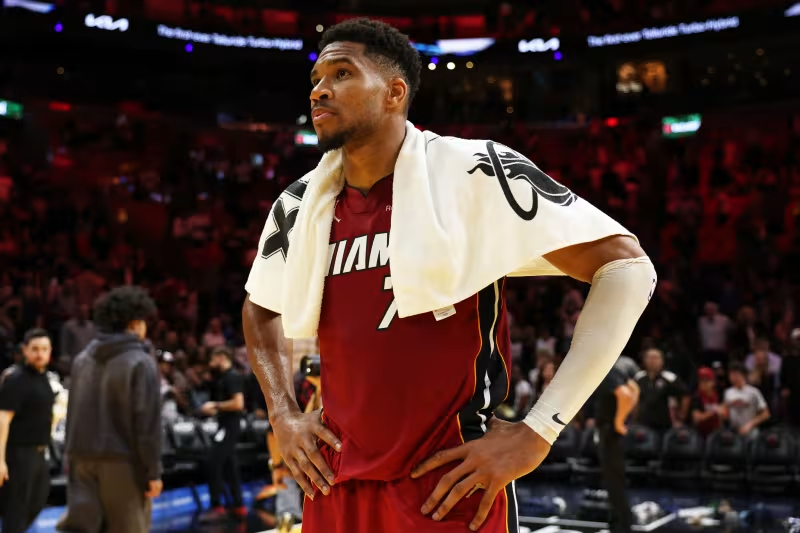
The departure of Giannis Antetokounmpo from Milwaukee Bucks to Miami Heat continues to generate reactions. This time, it was Doc Rivers, the former coach of the player in Wisconsin, who provided his version of how events unfolded. During his appearance on the podcast The Bill Simmons Podcast, the coach stated that the Greek player maintained an ambivalent stance regarding publicly requesting a trade because he wanted to leave Milwaukee without directly assuming the role of the one forcing his exit.
Rivers believes that Antetokounmpo wanted to change teams but hoped that the final decision would fall on the Bucks’ management. In this way, the player wouldn't have to appear before the fans as the one responsible for ending his time with the franchise.
“Giannis wanted to leave, but he was a Bucks player,” Rivers explained. “And he didn’t want to be seen as the ‘bad guy’ in the story. He wanted general manager Jon Horst and owner Wes Edens —and the rest of the management— to say, ‘We’re going to trade you,’ instead of him asking for the trade. In my view, that was the game being played.”
Rivers questions Giannis' public stance
The coach's words contrast with the messages that Antetokounmpo publicly conveyed during the 2025-26 season. In various statements to the media, including ESPN, the player insisted that he remained committed to Milwaukee and even claimed that he would “never” demand a trade.
However, according to reports published by ESPN, the situation being communicated internally was different. Sources consulted by the network stated that both Giannis himself and his agent, Alex Saratsis, had communicated to the Bucks since May 2025 that his desire was to leave the franchise.
The difference between the public discourse and private conversations is precisely one of the aspects that Rivers wanted to highlight. From his perspective, Antetokounmpo was looking for Milwaukee to take the initiative to avoid bearing the cost of an explicit trade request.
Eventually, the Bucks ended up sending the Greek player to Miami in a deal that also included Bobby Portis. In exchange, Milwaukee received Tyler Herro, Kel’el Ware, Jaime Jaquez Jr., and Kasparas Jakucionis, along with three first-round picks, a pick swap, and a second-round pick.
| Operation | Players and Assets |
|---|---|
| Miami Heat receive | Giannis Antetokounmpo and Bobby Portis |
| Milwaukee Bucks receive | Tyler Herro, Kel’el Ware, Jaime Jaquez Jr., and Kasparas Jakucionis |
| Additional Compensation | Three first-round picks, a pick swap, and a second-round pick |
Rivers’ criticisms of the Greek player's style of play
The former Milwaukee coach also spoke about his personal relationship with Antetokounmpo and the challenges of coaching a player with such unique characteristics. Rivers stated that he had a good opinion of the Greek off the court, though he believes that his way of playing poses a challenge for any coach.
“I liked Giannis a lot,” Rivers said. “As a person, I liked him even more. He’s an interesting person. He’s not an easy player to manage, precisely because he plays at a frantic pace, always attacking the rim with overwhelming intensity. He’s a complicated player... He has great passing ability, but at the same time, he doesn’t necessarily have an exceptional basketball IQ. It’s really curious; he has only one way of playing: attack the rim, impose force, pure strength. On every play, he tries to force the situation.”
Rivers believes that Antetokounmpo's physical talent and ability to create advantages do not always come with the execution that a team needs to compete at the highest level. Therefore, he pointed out that the player still has room to learn to appreciate other aspects of the game and not depend so much on his ability to impose himself near the rim.
In that regard, the coach mentioned Erik Spoelstra as a particularly important reference. According to Rivers, the Miami coach is distinguished by his ability to work on execution, an aspect that could help Giannis expand his resources on the court.
Rivers’ record in Milwaukee and Giannis' new scenario
The statements come after a complicated period for Rivers at the helm of the Bucks. The coach ended his three seasons in Milwaukee with a record of 97 wins and 103 losses, as well as two first-round playoff exits. The franchise also failed to qualify for the postseason last season, something that had not happened since the 2015-16 season.
After leaving the bench, Rivers joined NBC as an NBA analyst in September and does not plan to return to coaching. His appearance on Bill Simmons’ podcast thus serves as an opportunity to share his perspective on a period that ended without achieving the expected sports objectives.
Meanwhile, Antetokounmpo faces a new chapter in Miami. The Heat have a record of 3-6 after losing 120-100 on Thursday to the Golden State Warriors. Despite the rocky collective start, the Greek player is maintaining a leading role: he leads the team with averages of 27.3 points and 12.7 rebounds per game.
His arrival has changed the scenario in Miami, but it has also exposed the tensions that marked his exit from Milwaukee. Rivers has now focused on an issue that goes beyond the trade: the difference between wanting to leave and being willing to communicate it publicly.
This is an automatic translation. You can read the original news, Doc Rivers destapa la estrategia de Giannis para abandonar los Bucks: "No quería quedar como el malo"